
Six productions, one summer — how we fixed the Paris 2024 Olympics
In the summer of 2024, Paris became the most filmed city on earth. For eight weeks, every international broadcaster, brand, and platform with a European operation had a camera pointed at the French capital. The security perimeter extended across entire arrondissements. Permit timelines that were already tight in normal circumstances became genuinely extreme. Crew were competing for the same parking exemptions, the same access windows, the same local fixers.
FAB FIXERS worked on six separate productions across that period. Here’s what we learned.
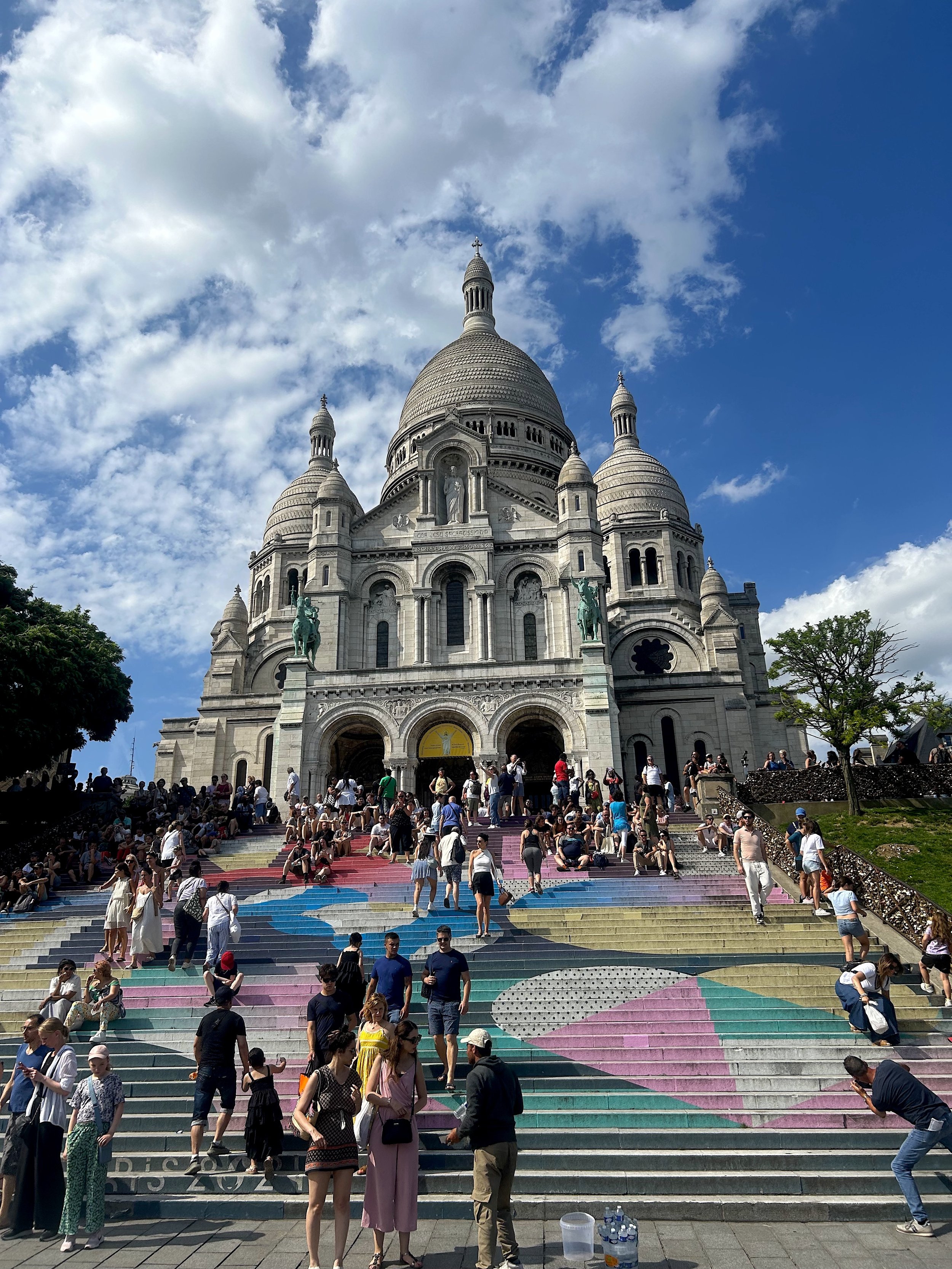
The Sacré-Coeur Basilica in Montmartre, Paris, with the staircase flocked to the colours of the Paris 2024 Olympic Games.
The six productions
The assignments spanned two months and two very different types of work.
Delta Air Lines came first, in June — a D-Day 80th anniversary documentary in Normandy that predated the Games but sat in the same production window. Managing Normandy logistics while Paris was already entering Olympic preparation mode required careful coordination between two completely different geographic and institutional environments.
Then, the following week: CBC News required access to the Notre-Dame construction site, as part of its Olympic coverage and months ahead of the Cathedral’s grand reopening in December of that year. It took months of back-and-forth between with Reconstruire Notre-Dame de Paris, the public administration in charge of the project, but FAB FIXERS was finally able to secure exclusive access to a national icon and world heritage site.
In July: CBC News for full Olympic coverage across Paris — Versailles, the Stade de France, and the city itself. The CBC team needed a fixer who could move between official Olympic venues and the broader Paris story simultaneously, managing accreditations, logistics, and the constant stream of short-notice requests that live news coverage generates during a major event.
In parallel: the Airbnb × Musée d'Orsay experience, which we had begun coordinating in April. This was the most unusual of the five — a bespoke cultural experience created for guests during the Olympics Opening Ceremony, requiring coordination between one of the world's most prestigious museums, a global tech brand, and the logistical realities of the most security-intensive period in Paris's recent history. FAB FIXERS oversaw the photo shoot of the set designed by Olympic designer Mathieu Lehanneur, before it was installed at the Musée d’Orsay.
Google's Olympic Experience project ran simultaneously with the CBC coverage in July — a branded content production requiring location access, crew, and logistics at Paris’ Palais Brognart at a moment when the city's entire logistical infrastructure was under maximum strain.
Finally: USA Today's Olympics security story in June, which required a different kind of access — not to the Games themselves, but to the city around them. Covering how Paris was managing security for the biggest event in its modern history demanded local knowledge, institutional contacts, and the ability to facilitate reporting on a subject that French authorities were understandably sensitive about.
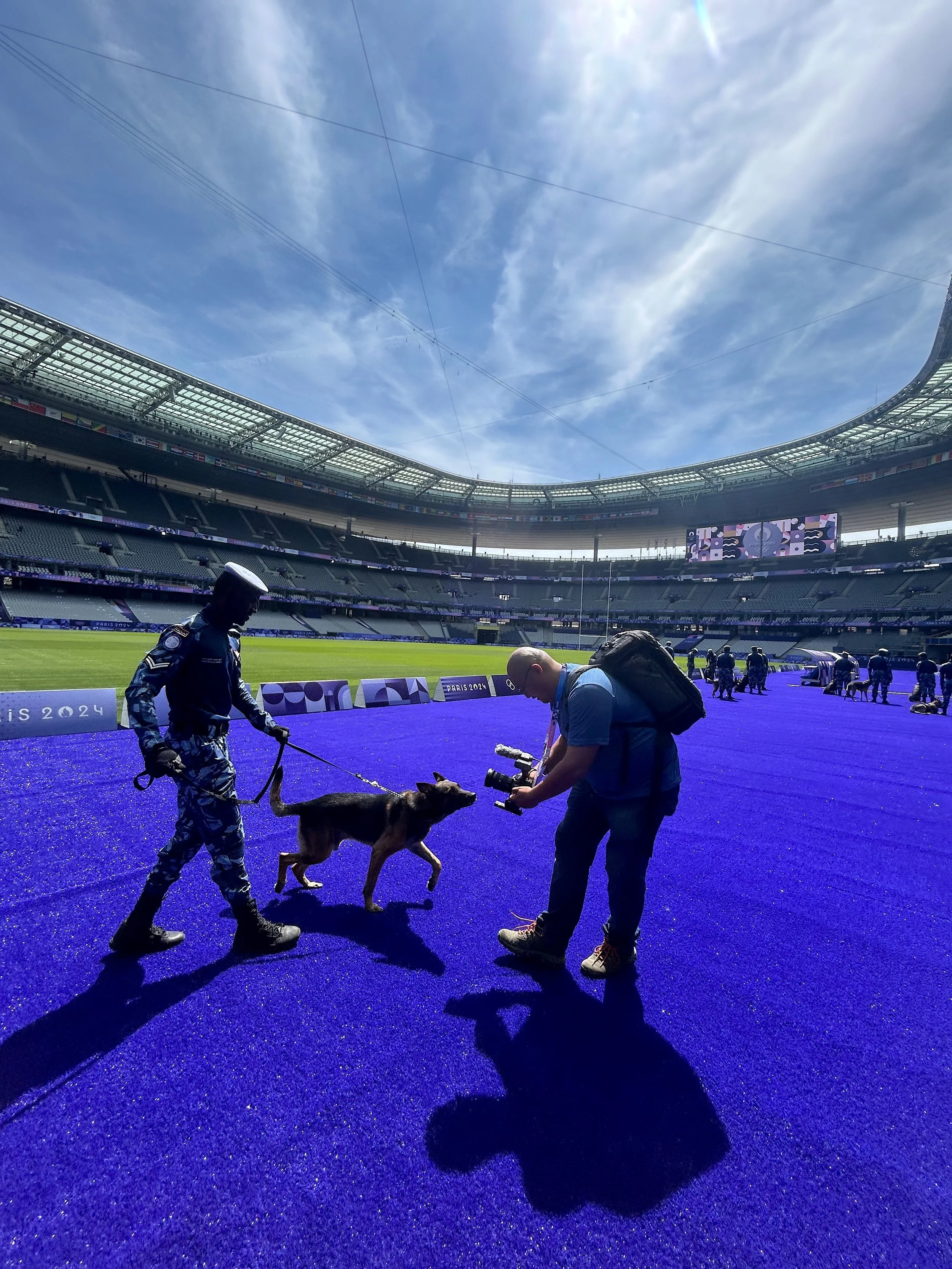
Filming at the Stade de France days with CBC News, days before the opening ceremony
What mega-event production actually requires
The Paris 2024 experience taught us several things about mega-event production that apply directly to what is coming: the 2030 French Alps Winter Olympics, the 2028 Los Angeles Games, and any other major international event that brings global media to a single city.
First: the permit timeline compresses, but the permit requirements expand. The AGATE system was under its heaviest load during the Olympic period. Applications that would normally take three weeks were taking longer, and the list of restricted zones — areas where standard filming permissions were suspended or modified — expanded continuously as the Games approached. Productions that hadn't filed early enough found themselves without the access they needed. Productions that had filed early, with a fixer who knew the system, were in place and operational.
Second: accreditation and permits are not the same thing, and confusing them is expensive. Olympic accreditation covers access to official venues and the Olympic media zone. It does not cover filming on public streets, in parks, near monuments, or at any location outside the official Olympic perimeter. We managed both simultaneously for CBC News — two parallel permit tracks, two sets of deadlines, two sets of requirements — and the ability to manage both was the difference between the coverage they wanted and the coverage they could get.
Third: the local crew market tightens dramatically. Every production in Paris was competing for the same pool of experienced bilingual crew during the Olympic period. Productions that hadn't locked their crew before June found themselves paying premium rates for less experienced alternatives. We had relationships that held — crew who had worked with us before and committed to our productions ahead of the Games.
Fourth: your fixer needs to be able to hold multiple client relationships simultaneously without any of them experiencing degraded service. This is a capacity question as much as a skills question. During the Olympic period, we were managing logistics for five productions in parallel — each with different requirements, different schedules, and different institutional relationships. The ability to do that without dropping anything requires systems, relationships, and genuine experience of high-pressure multi-client production environments.
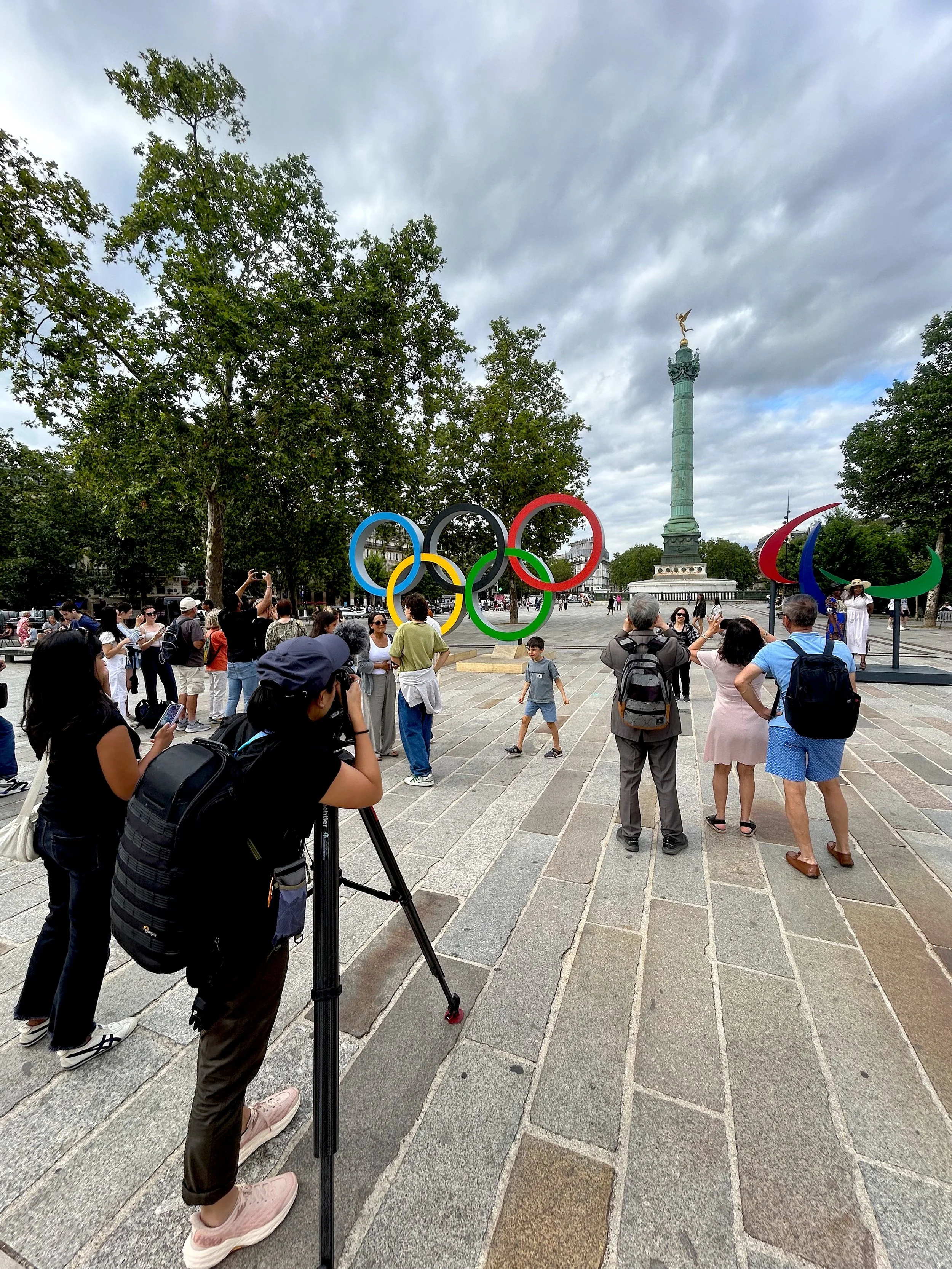
Filming at Place de la Bastille in Paris, with a small crew of CBC News reporter
What's coming — and why you should plan now
The French Alps 2030 Winter Olympics opens in February 2030 — that’s in 4 years. If your production is planning French Alps coverage and needs a Europe-based fixer who understands mega-event production, now’s a good time to start.
The Los Angeles 2028 Games will bring the same logistical challenges to a different geography. Productions that cover LA will need local fixers — but productions covering the international build-up, European qualifier events, and the global athlete story will continue to need France and Belgium-based ground support.
FAB FIXERS has the Olympic playbook. We've run it once, across five simultaneous productions, in the most logistically complex version of it imaginable. We know what it takes.
Planning coverage of a major international event in France or Belgium? Contact us early: virgile@fabfixers.com | +33 6 22 99 43 50 | fabfixers.com